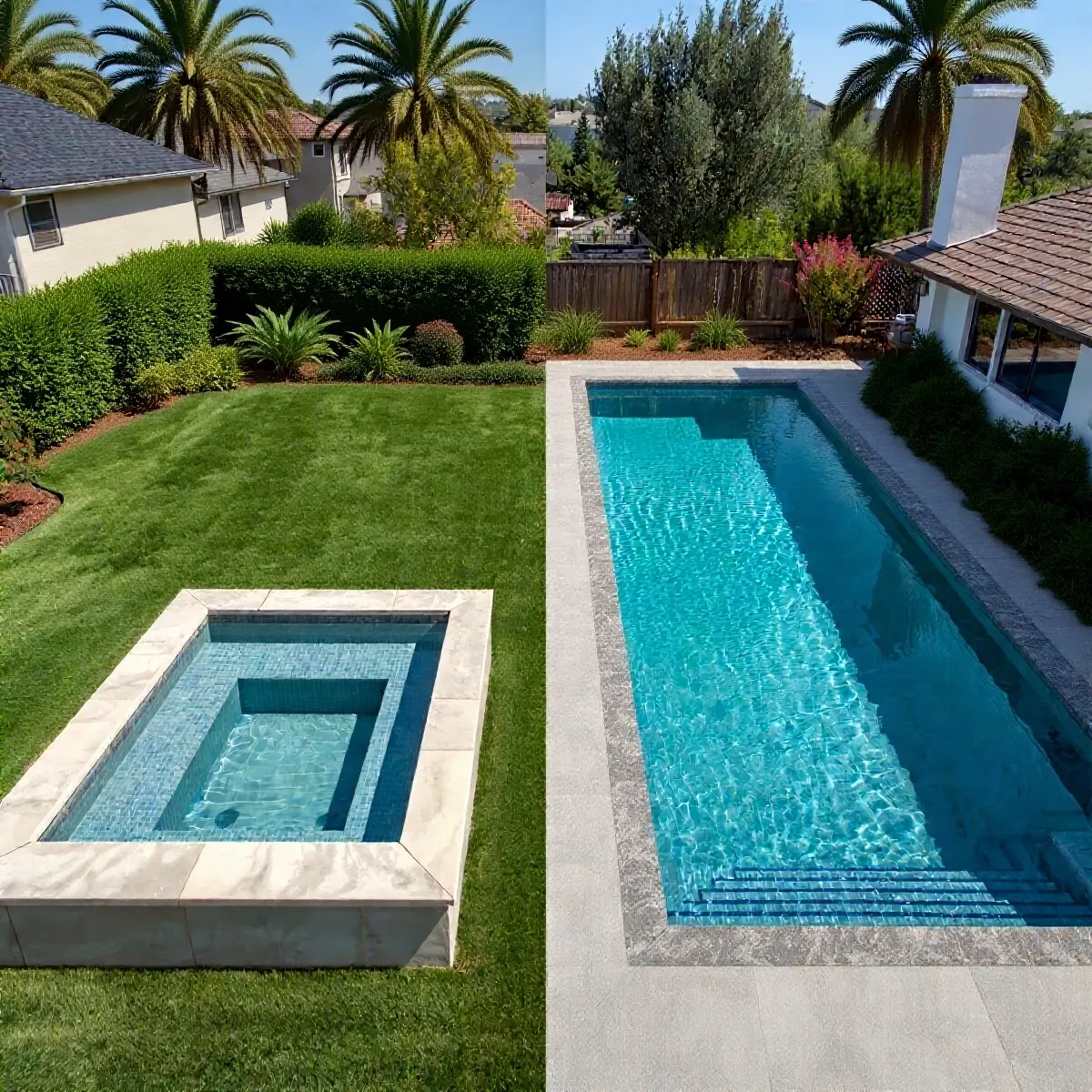
If you’re trying to decide between a small pool and a plunge pool in Brisbane, you’re not alone.
It’s one of the most common decisions homeowners face, especially when space and budget are limited.
At first glance, both options seem very similar. However, from what I’ve seen analysing real projects, the differences are more important than they appear.
👉 Choosing the wrong one for your property can cost you more, not less.
Let’s break it down so you can make the right decision.
Small Pool vs Plunge Pool: What’s the Difference?
Before comparing costs, it’s important to understand how these pools differ.
A small pool is essentially a compact version of a traditional pool. As a result, it offers more versatility for different uses.
On the other hand, a plunge pool is designed mainly for relaxation, cooling off, and limited spaces.
👉 The key difference isn’t just size, it’s how you’ll use it.
And that alone can influence your total investment.
Cost Comparison: Small Pools vs Plunge Pools in Brisbane
Average cost ranges
In Brisbane, typical price ranges look like this:
- Small pools: $60,000 – $100,000+
- Plunge pools: $40,000 – $70,000+
At first, plunge pools seem like the cheaper option. However, that’s only part of the story.
What affects the price in each
Both pool types are influenced by similar factors. For example:
- Site conditions
- Materials
- Access to the property
- Features and upgrades
👉 Prices vary massively, and not always for the reasons people think.
Which one is actually cheaper?
Although plunge pools are usually cheaper upfront, they’re not always cheaper overall.
Once you include:
- Heating systems
- Landscaping
- Additional features
👉 The price gap often becomes much smaller than expected.
In some cases, it can even disappear entirely.
What Impacts the Cost the Most in Each Option
Size and design
Small pools tend to offer more flexibility in design. However, that also means more variation in cost.
By contrast, plunge pools are simpler in structure. Even so, design choices can still influence the final price.
Site conditions
Site conditions affect both options equally.
For instance:
- Sloped land increases excavation costs
- Poor soil requires extra engineering
- Limited access raises labour costs
👉 In many projects, this factor matters more than the pool type itself.
Features and upgrades
This is where budgets often blow out.
Common additions include:
- Heating systems
- Lighting
- Water features
- Premium finishes
From what I’ve seen, many homeowners underestimate this stage completely.
👉 If you want a full breakdown:
“complete guide to pool costs in Brisbane” → Pool Cost Brisbane
Pros and Cons: Small Pool vs Plunge Pool
Small pool advantages
- They offer greater versatility, making them ideal for families and swimming
- In the long term, they usually provide better overall value
- Additionally, they allow more flexibility in design and layout
Plunge pool advantages
- They typically come with a lower upfront cost
- Because of their size, they work well in tight spaces
- As a result, installation is often faster and simpler
Key trade-offs
On one hand, small pools provide more usability.
On the other hand, plunge pools focus on efficiency and simplicity.
👉 The better option depends entirely on your situation.
Which Pool Is Better for Your Backyard?
Best for small spaces
If your space is limited, a plunge pool is usually the better choice.
Best for families
For families, a small pool tends to be more practical.
This is because it offers more room for swimming and activities.
Best for budget
Budget depends on how you define value.
- For lower upfront cost → plunge pool
- For long-term value → small pool
Common Mistakes When Choosing Between Small and Plunge Pools
Choosing based on price alone
This is one of the most common mistakes.
👉 The cheapest option isn’t always the smartest one.
Not matching the pool to the property
I’ve seen this happen repeatedly.
For example, some homeowners install plunge pools when they actually need more space. In other cases, small pools are forced into unsuitable areas.
Ignoring long-term use
It’s important to think beyond installation.
Ask yourself:
- How will I use this pool?
- Who will use it?
- Will it still work in 5 years?
My Experience: What Most Homeowners Get Wrong
After analysing many pool projects in Brisbane, one pattern keeps repeating.
👉 Most homeowners don’t choose the wrong pool because of budget…
👉 They choose it because they don’t think through how they’ll actually use it.
Because of that:
👉 Design decisions early change everything.
Final Verdict: Small Pool or Plunge Pool?
Here’s the simple breakdown:
👉 Choose a plunge pool if:
- You have limited space
- You want a lower upfront cost
- You prioritise simplicity
👉 Choose a small pool if:
- You want more versatility
- You have a family
- You’re thinking long-term
👉 If you want something tailored:
“custom concrete pool design options Brisbane” → Custom Concrete Pools Brisbane
👉 If space is your main concern:
“best small pool designs Brisbane” → Small Pools Brisbane
FAQs About Small vs Plunge Pool Costs
Are plunge pools cheaper than small pools?
Yes, they are usually cheaper upfront. However, total costs can become similar depending on features and site conditions.
Which pool is better for small backyards?
Plunge pools are typically the better option for tight spaces.
Which pool adds more value?
In most cases, small pools provide better long-term value.
Which is easier to maintain?
Generally, plunge pools are easier and cheaper to maintain.
Conclusion
Choosing between a small pool and a plunge pool isn’t just about cost.
Instead, it’s about finding the right fit for your space, budget, and lifestyle.
From everything I’ve seen:
👉 The best choice isn’t the cheapest one.
👉 It’s the one that actually works for you.